Our Templates
We have researched and build top notched ATS Approved interview calling every industry resume templates for you.
Android Resume Templates
ATS approved Android resume template. Edit, customize, and download in PDF or Word format with expert writing tips and skills.
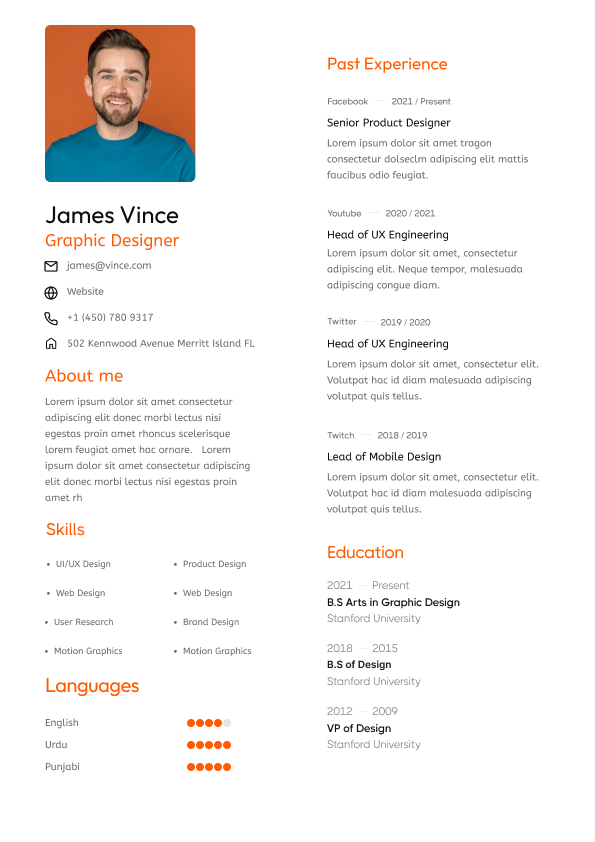
Table of Contents
Android Developer Resume: Examples, Formats & 70+ Keyword Templates
An Android Developer resume must prove your ability to architect, build, test, and ship high-performance native mobile applications. Technical recruiters and hiring managers screen an android developer resume, mobile app developer CV, or Kotlin engineer application for real Google Play Store links, measurable performance optimization, and deep technical fluency across the modern Android stack — including Kotlin, Jetpack Compose, Coroutines, Flow, MVVM, MVI, Hilt, and Room database.
Whether you are writing a fresher android developer resume, a mid-level kotlin software developer resume, or a senior lead android architect resume, the winning strategy requires high ATS keyword density, quantifiable impact metrics (crash-free rates, ANR reductions, cold-start speedups), and exact alignment with job description specifications.
This comprehensive guide provides an ATS-optimized android developer resume format, experience-level professional summaries, copy-paste resume bullet points with metrics, a 50+ skill keyword matrix, and 5 detailed FAQs with 20+ additional search keywords.
What Does an Android Developer Do?
An Android Developer designs, develops, tests, and maintains native Android mobile applications using Kotlin (Google's official language) and Java. Core day-to-day responsibilities include:
- Building reactive UI interfaces using Jetpack Compose, Android XML Layouts, and Material Design 3 guidelines
- Implementing robust app architectures (MVVM, MVI, Clean Architecture, Multi-module project structures)
- Handling asynchronous data streams and concurrency using Kotlin Coroutines, StateFlow, and SharedFlow
- Integrating RESTful APIs, GraphQL endpoints, and JSON serialization using Retrofit, OkHttp, and Moshi/Moshi-Kotlin
- Managing offline caching and local database persistence with Room ORM, SQLite, and DataStore/SharedPreferences
- Writing unit, integration, and UI automation tests using JUnit 5, Mockito, MockK, Espresso, and UI Automator
- Optimizing mobile performance — eliminating ANRs (Application Not Responding), memory leaks (LeakCanary), profiling CPU/RAM usage, and reducing APK/AAB bundle size with ProGuard/R8
- Publishing apps on Google Play Console, configuring staged rollouts, internal testing tracks, Firebase Crashlytics, and continuous integration pipelines (GitHub Actions, Bitrise)
Android Developer Resume Format: ATS Parsing Optimization
To ensure your resume passes Applicant Tracking Systems (ATS) like Lever, Greenhouse, and Workday:
- Single-column layout — avoid complex columns, progress bars, or graphic icons that fail ATS parsing
- Standard headers — Summary, Core Skills, Work Experience, Portfolio Projects, Education, Certifications
- PDF output default — submit as
firstname-lastname-android-developer.pdf - Length rule — 1 page for developers under 7 years experience; 2 pages maximum for lead Android architects
- Keyword Placement — mirror keywords (Kotlin, Compose, Coroutines, MVVM, Retrofit, Hilt) across both your Skills section and Work Experience bullet points
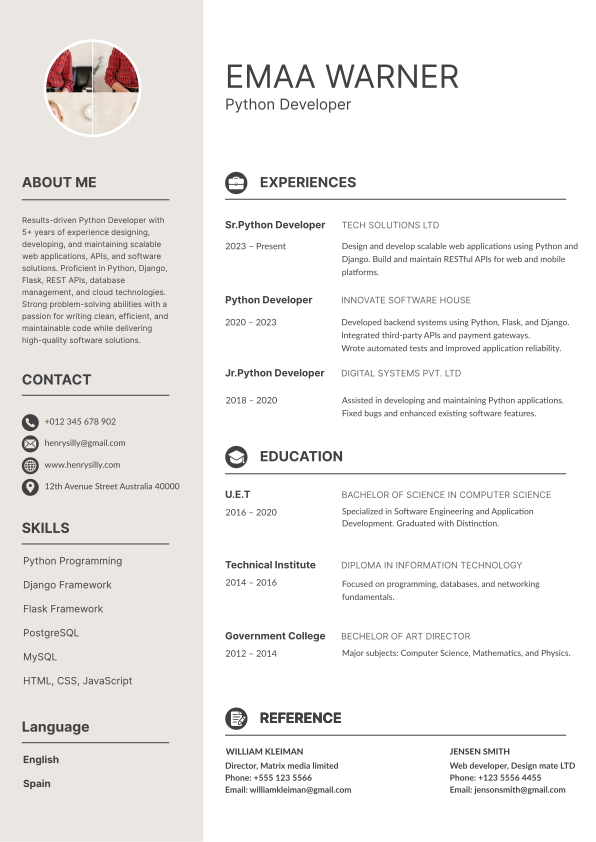
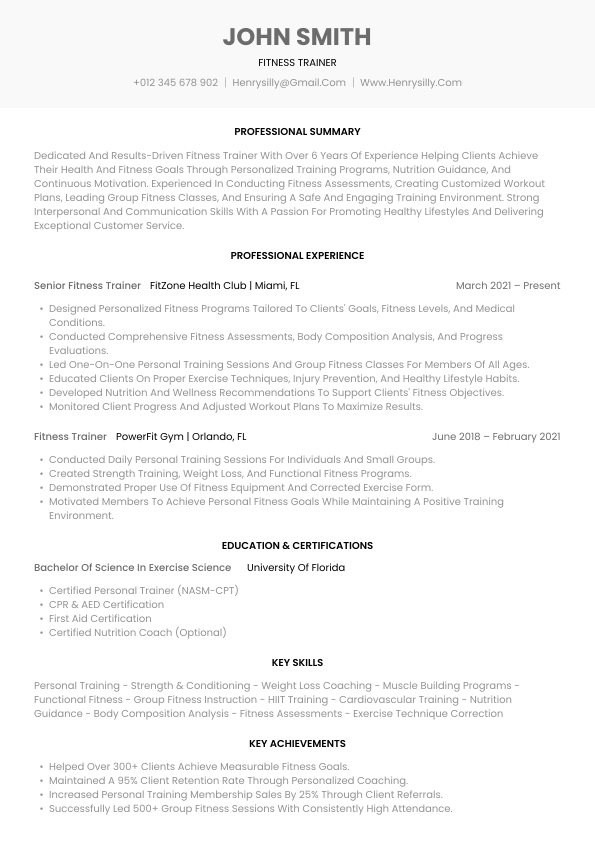
Android Developer Resume Template
Key Android Developer Skills (50+ Core Keywords)
- Programming Languages: Kotlin, Java, XML, Groovy, SQL, Bash Scripting
- UI Frameworks & Styling: Jetpack Compose, Material Design 3, Android XML Layouts, ConstraintLayout, Custom Views, Canvas API
- Architecture Patterns: MVVM (Model-View-ViewModel), MVI (Model-View-Intent), Clean Architecture, Multi-Module Architecture, Repository Pattern, Dependency Injection
- Jetpack & Core Libraries: Room DB, ViewModel, LiveData, StateFlow, SharedFlow, Coroutines, Navigation Component, WorkManager, DataStore, Paging 3, CameraX
- Dependency Injection & Networking: Dagger, Hilt, Koin, Retrofit, OkHttp, Moshi, Gson, REST APIs, GraphQL, WebSockets
- Testing & Debugging: JUnit 5, Mockito, MockK, Espresso, UI Automator, Turbine, LeakCanary, Android Studio Profiler
- DevOps, Cloud & Tools: Android Studio, Git, GitHub Actions, Bitrise, Jenkins, Gradle, Firebase (Crashlytics, Analytics, Cloud Messaging, Remote Config), Google Play Console, ProGuard, R8, Keystore Signing
- Methodologies & Best Practices: Agile/Scrum, Code Reviews, Memory Management, ANR Optimization, Cold-Start Speedup, Offline-First Architecture, WCAG Mobile Accessibility
Android Developer Resume Summary Examples
Fresher / Entry-Level Android Developer Resume Summary
Entry-level Android Developer with strong fundamentals in Kotlin, Jetpack Compose, MVVM architecture, and Room local database. Built and published a native Android application on the Google Play Store with 1,000+ downloads, integrating Retrofit REST APIs and JUnit unit test coverage. Active open-source contributor with clean GitHub commit history.
Mid-Level Android Developer Resume Summary
Android Developer with 4+ years of experience engineering high-scale native Kotlin apps serving 500K+ users. Migrated 40+ legacy XML screens to Jetpack Compose, implemented Hilt dependency injection, and reduced Firebase Crashlytics crash rate to 0.1%. Proven expertise in Coroutines, StateFlow, and offline-first Room architecture.
Senior Android Architect / Lead Resume Summary
Senior Lead Android Engineer with 8+ years architecting enterprise mobile applications serving 3M+ active users. Spearheaded modularization of a monolithic Android app into a 12-module Clean Architecture pattern, cutting Gradle build times by 45% and mentoring a team of 6 Kotlin engineers.
Android Resume Bullets with Metrics & Keywords
- Reengineered mobile checkout flow using Jetpack Compose and StateFlow, lowering UI render times by 40% and increasing completed purchases by 14%
- Architected offline-first data sync engine using Room DB, WorkManager, and Retrofit, maintaining 100% app functionality during connectivity drops
- Eliminated memory leaks using LeakCanary and Profiler tools, reducing ANR (Application Not Responding) rate from 1.8% to 0.15%
- Automated CI/CD build pipeline with GitHub Actions, Bitrise, and Fastlane, accelerating Play Store beta deployments from 1 day to 15 minutes
- Expanded unit and UI test coverage from 25% to 82% using JUnit 5, MockK, and Espresso, catching 40+ critical regressions pre-release
Frequently Asked Questions (FAQs)
Q1. What are the essential ATS keywords for an Android Developer resume in 2026?
Core ATS keywords include: Kotlin, Jetpack Compose, MVVM Architecture, MVI Pattern, Coroutines, StateFlow, Retrofit, Room Database, Hilt, Dagger2, Clean Architecture, JUnit 5, Espresso, Firebase Crashlytics, Android Studio Profiler, Gradle, and Google Play Console release management.
Q2. Should I list Kotlin or Java first on an Android Mobile Application Developer CV?
Always list Kotlin first as it is Google's modern official language for Android software engineering. Mention Java experience in your skills matrix to show background knowledge in legacy Android codebases and cross-platform migration.
Q3. How do I write an entry-level Android developer resume with no commercial software experience?
Feature a prominent Portfolio Projects section above work history. Include 3+ GitHub repository links with clean Kotlin code, documented unit tests, and ideally one live app published on the Google Play Store to demonstrate real app deployment capabilities.
Q4. What is the average Android Developer salary and career growth trajectory?
Junior Android Developers earn between $70,000 and $95,000 annually. Mid-level Kotlin Engineers average $110,000 to $140,000, while Senior Android Software Architects and Mobile Engineering Leads command salaries ranging from $160,000 to $220,000+ depending on tech stack complexity and team size.
Q5. What certifications and technical interview preparation topics matter most for Android roles?
The Meta Android Developer Professional Certificate and Associate Android Developer credentials carry strong weight. For technical coding interviews, prepare system design topics such as offline caching strategies, image loading pipelines (Coil/Glide), thread synchronization, and memory leak profiling.