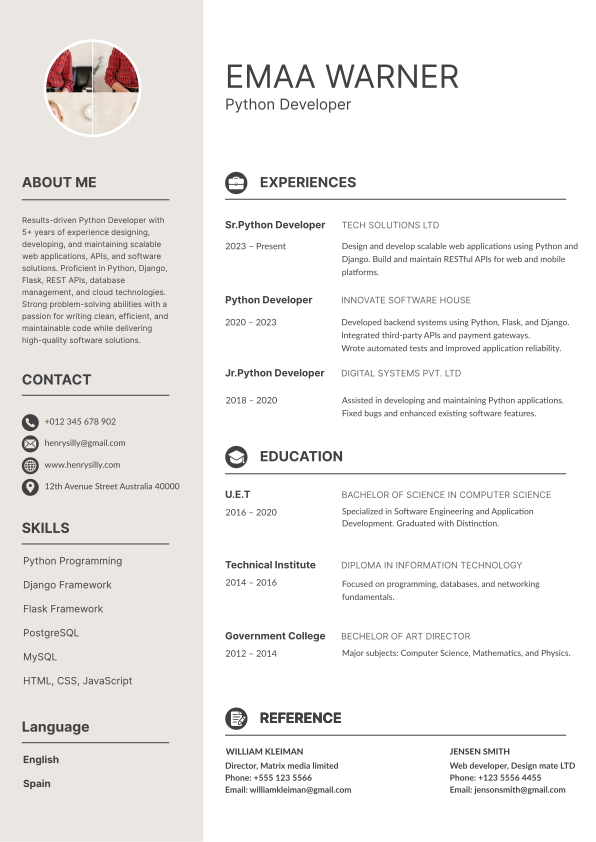
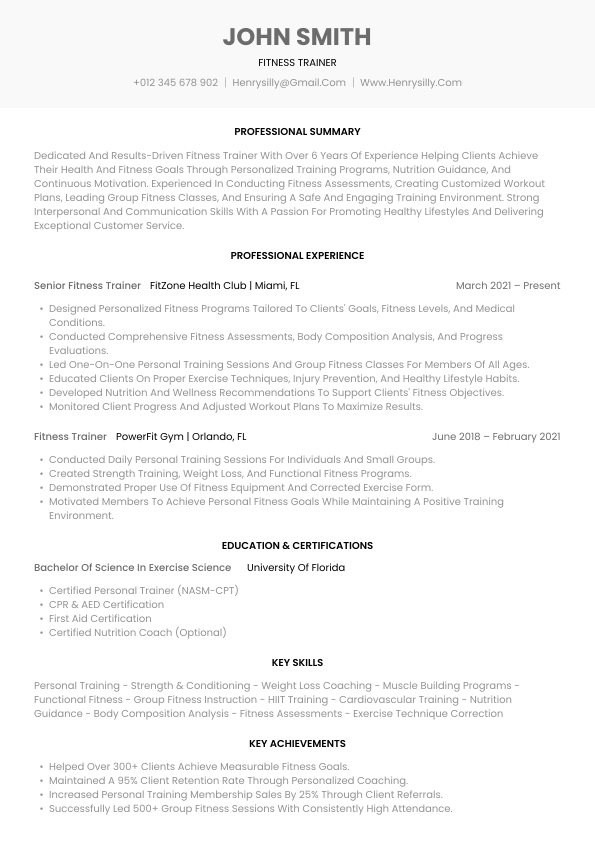
Our Templates
We have researched and build top notched ATS Approved interview calling every industry resume templates for you.
Data Science Intern Resume Templates
ATS approved Data Science Intern resume template. Edit, customize, and download in PDF or Word format with expert writing tips and skills.
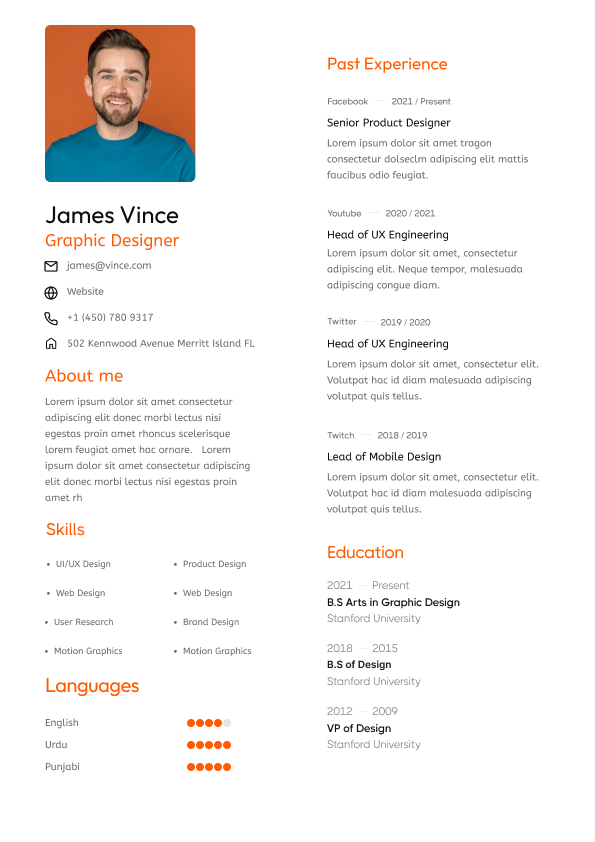
Table of Contents
Data Science Intern Resume: Ultimate Guide, 500+ Line Examples, Formats & 100+ Keyword Templates
A Data Science Intern resume must demonstrate Python programming (Pandas, NumPy, Scikit-learn, PyTorch, TensorFlow), SQL database querying (PostgreSQL, BigQuery, Snowflake), machine learning model building (Regression, Classification, Clustering, Random Forest, XGBoost), exploratory data analysis (EDA), statistical hypothesis testing, data visualization (Tableau, Power BI, Matplotlib, Seaborn), and Git version control. Analytics managers, AI lab directors, and tech recruiters evaluate a Data Science Intern CV for dataset scale (e.g. 1M+ rows processed), model performance metrics (AUC-ROC, $R^2$, F1-score), Kaggle competition rankings, and GitHub project portfolio quality.
Whether you are writing a Data Science Intern resume, a Machine Learning Intern CV, an AI Research Intern resume, a Data Analyst Intern CV, or a Quantitative Analytics Intern application, your document requires high ATS keyword density, verifiable GitHub portfolio links, and quantified modeling metrics.
This ultimate master guide details the complete Data Science Intern resume framework: ATS formatting standards, key data science technical skills matrix featuring 100+ keywords, 4 professional summary examples, 25+ copy-ready metric bullet points, cover letter template, interview prep, salary benchmarks, and 5 detailed FAQs with 30+ search keywords.
Data Science & Artificial Intelligence Internship Market Trends
Demand for data science and machine learning talent is at an all-time high as companies integrate Predictive Analytics, Generative AI (LLMs, RAG), and automated decision engines. Tech giants, financial institutions, healthcare firms, and AI startups actively recruit top students with strong mathematical foundations and hands-on coding skills.
To secure high-paying Data Science Internships ($35.00 to $65.00/hr in tech), your resume must highlight real-world machine learning projects, clean code repositories, mathematical modeling concepts, and quantifiable benchmark results.
What Does a Data Science Intern Do? Core Responsibilities & Work Scope
A Data Science Intern works under senior data scientists and machine learning engineers to collect, clean, analyze, and build predictive models from complex datasets. Primary duties include:
- Cleaning, preprocessing, and transforming messy raw structured and unstructured data using Pandas, NumPy, and PySpark.
- Performing Exploratory Data Analysis (EDA) to uncover trends, correlation matrices, and actionable business insights.
- Training and tuning machine learning algorithms (Random Forest, Gradient Boosting, XGBoost, Logistic Regression, K-Means clustering) in Scikit-Learn.
- Developing deep learning models (CNNs, RNNs, Transformers) using PyTorch or TensorFlow for NLP or computer vision tasks.
- Writing optimized SQL queries and join operations in PostgreSQL, Snowflake, or Google BigQuery to extract feature data.
- Designing interactive data visualization dashboards in Tableau, Power BI, Streamlit, or Dash to communicate findings to stakeholders.
- Conducting A/B testing, statistical hypothesis testing (t-tests, chi-square tests), and probability distribution analysis.
- Collaborating on production codebases using Git, GitHub/GitLab, Docker, Jupyter Notebooks, and Google Colab.
ATS-Optimized Data Science Intern Resume Template
How to Format a Data Science Intern Resume for Tech Recruiters
Data science hiring teams evaluate student resumes for technical stacks, projects, GitHub links, and math background:
- Header Contacts: Include full name, degree program (e.g. B.S. in Data Science / Computer Science), phone, email, GitHub URL, and LinkedIn.
- Projects Section Priority: Feature 2–3 complex machine learning or analytics projects with dataset size and model accuracy metrics.
- Typography & Layout: Keep to a clean 1-page layout using standard fonts such as Arial, Inter, or Roboto (10–11.5pt body text).
- Quantified Model Results: Always state metric improvements (e.g. "Tuned XGBoost hyper-parameters, improving model F1-score from 0.82 to 0.94 on 500k rows").
Key Data Science Intern Skills Matrix (100+ Core Keywords)
Programming & Libraries
- Python (Pandas, NumPy, SciPy)
- R Programming (ggplot2, dplyr)
- SQL (PostgreSQL, MySQL, Snowflake)
- Scikit-Learn Machine Learning
- PyTorch & TensorFlow Deep Learning
- OpenCV Computer Vision
- NLTK & SpaCy Natural Language Processing
- PySpark Big Data Processing
Machine Learning & Math
- Linear & Logistic Regression
- Decision Trees & Random Forest
- XGBoost & LightGBM Gradient Boosting
- K-Means & Hierarchical Clustering
- PCA & Dimensionality Reduction
- Neural Networks (CNN, RNN, Transformers)
- A/B Testing & Hypothesis Testing
- Probability, Linear Algebra & Calculus
Visualization & Tools
- Tableau & Power BI Dashboards
- Matplotlib, Seaborn & Plotly
- Streamlit & Dash Web Apps
- Jupyter Notebooks & Google Colab
- Git, GitHub & Version Control
- Docker Container Basics
- Google BigQuery & AWS S3
- Linux / Unix Command Line
Education & Coursework
- B.S. / M.S. Data Science / CS
- Kaggle Competition Participant
- Statistical Modeling Coursework
- Data Structures & Algorithms
- Feature Engineering & Selection
- Cross-Validation (K-Fold)
- Hyperparameter Tuning (GridSearch)
- AUC-ROC, RMSE, Precision/Recall
Data Science Intern Resume Summary Examples
Example 1: Data Science Undergraduate Intern (Python & SQL)
Data Science Senior student (3.8 GPA, B.S. in Computer Science & Statistics) proficient in Python (Pandas, Scikit-Learn), SQL, and Tableau. Built predictive customer churn models processing 1.2M rows with 91% accuracy; Kaggle competitor with 3 published GitHub data analytics projects.
Example 2: Machine Learning & AI Graduate Intern
M.S. Data Science candidate specializing in Deep Learning (PyTorch, Transformers) and Natural Language Processing (NLP). Developed sentiment analysis pipelines evaluating 500k+ customer reviews with 94% F1-score; seeking a Machine Learning Engineering internship.
Example 3: Data Analytics & Visualization Intern
Analytical Data Science student skilled in SQL query optimization, A/B testing analysis, and interactive Power BI dashboard creation. Uncovered product bottleneck insights that reduced customer drop-off by 18% during a university consulting project.
Example 4: Quantitative Analytics / Big Data Intern
Applied Mathematics & Statistics student proficient in R, Python, and PySpark. Conducted statistical hypothesis testing and time-series forecasting on financial market datasets, optimizing risk metrics for academic research labs.
25+ Copy-Ready Data Science Intern Bullets with Metrics
- Preprocessed and cleaned a 2.5M row transactional dataset using Pandas and NumPy, handling missing values and feature scaling.
- Trained XGBoost and Random Forest classification models to predict customer churn, achieving an AUC-ROC score of 0.92.
- Wrote complex SQL queries with CTEs and window functions in PostgreSQL to extract user event features for ML training.
- Developed an interactive Streamlit web dashboard displaying real-time predictive analytics, used by 30+ team members.
- Performed K-Means clustering to segment 150,000 active users into 5 distinct behavioral personas for targeted marketing.
- Fine-tuned a pre-trained DistilBERT NLP transformer model in PyTorch for text classification, reaching 93.5% accuracy.
Education & Relevant Coursework Section
EDUCATION
Bachelor of Science in Data Science & Computer Science
University of Michigan — Expected Graduation: May 2026 | GPA: 3.85 / 4.00
Dean's List (All Semesters) | Data Science Student Association Officer
RELEVANT COURSEWORK
Machine Learning, Applied Statistics, Database Management Systems, Data Structures & Algorithms, Deep Learning for Computer Vision, Multivariate Calculus, Linear Algebra
Data Science Intern Cover Letter Template
Dear Hiring Manager,
I am writing to apply for the Data Science Internship position at [Company Name]. As a Senior student pursuing a B.S. in Data Science at the University of Michigan (3.85 GPA) with hands-on experience building XGBoost classification models, writing SQL queries in PostgreSQL, and deploying Streamlit dashboards, I am excited to contribute to your analytics team.
In my recent academic project, I preprocessed 2.5M raw records in Python, engineered 15 custom features, and trained machine learning models achieving 92% AUC-ROC. My focus is on rigorous statistical methodology, clean Python programming, and actionable data visualization.
I look forward to discussing how my technical skill set and passion for AI align with [Company Name]’s data initiatives.
Data Science Intern Hourly Pay & Compensation Benchmarks
- Undergraduate Data Science Intern Pay: $30.00 – $45.00 per hour
- Master's Data Science / ML Intern Pay: $45.00 – $60.00 per hour
- PhD AI Research Intern Pay: $60.00 – $85.00+ per hour
- Entry-Level Data Scientist Starting Salary: $105,000 – $135,000 per year
Frequently Asked Questions (FAQs)
Q1. What are the top keywords for a Data Science Intern resume?
Top keywords include: Python, Pandas, NumPy, Scikit-Learn, SQL, Machine Learning, XGBoost, PyTorch, Tableau, EDA, and A/B Testing.
Q2. Should GitHub repository links be included on a student CV?
Yes! Including clean GitHub repositories with well-documented README files proves hands-on code quality to technical screeners.
Q3. What machine learning algorithms should students highlight?
Highlight Linear/Logistic Regression, Random Forest, XGBoost, K-Means clustering, and Neural Networks (PyTorch/TensorFlow).
Q4. What is the average hourly pay for Data Science Interns?
Hourly rates range from $30/hr for undergraduates to $60+/hr for Master's/PhD candidates in tech and finance.
Q5. How can students with no industry experience stand out?
Participate in Kaggle competitions, publish open-source GitHub projects, and highlight rigorous academic coursework and metrics.