Our Templates
We have researched and build top notched ATS Approved interview calling every industry resume templates for you.
Systems Engineer Resume Templates
ATS approved Systems Engineer resume template. Edit, customize, and download in PDF or Word format with expert writing tips and skills.

Table of Contents
Systems Engineer & Infrastructure Architect Resume: Ultimate Guide, 500+ Line Examples, Formats & 100+ Keyword Templates
A Systems Engineer or Infrastructure Systems Architect resume must demonstrate expertise in Linux (RHEL, CentOS, Ubuntu Enterprise) and Windows Server (2022/2019) administration, virtualization (VMware vSphere ESXi, vCenter, KVM, Hyper-V), enterprise cloud infrastructure (AWS, Azure, GCP), automated configuration management (Ansible, Puppet, Chef, SaltStack), Infrastructure as Code (Terraform, CloudFormation), container orchestration (Kubernetes, Docker), storage SAN/NAS platforms (NetApp, Pure Storage), active directory & identity federation (AD FS, LDAP, Entra ID), and system monitoring (Nagios, Zabbix, Datadog). Vice Presidents of Infrastructure and Directors of Systems Engineering evaluate a Systems Engineer CV for server fleet scale (e.g. 2,000+ virtual and physical nodes), system availability SLAs (99.999%), and automated patch compliance metrics.
Whether you are writing a Senior Systems Engineer resume, a Linux Systems Administrator CV, a VMware Systems Architect resume, a Cloud Infrastructure Engineer CV, or a Principal Systems Engineer application, your document requires high ATS keyword density, official certifications (RHCE, VCP-DCV, AWS Solutions Architect, MCSE), and quantified system reliability metrics.
This ultimate master guide details the complete Systems Engineer resume framework: ATS formatting standards, key systems engineering technical skills matrix featuring 100+ keywords, 4 professional summary examples, 25+ copy-ready metric bullet points, cover letter template, interview prep, salary benchmarks, and 5 detailed FAQs with 30+ search keywords.
Systems Engineering & Enterprise Infrastructure Career Growth
Systems engineering bridges on-premise data center hardware, VMware virtualization clusters, and hybrid cloud infrastructures. As enterprises adopt hybrid cloud strategies, Systems Engineers who can automate server deployment using Ansible, Terraform, and Python are in demand across finance, defense, telecom, and healthcare sectors.
To secure high-paying Senior Systems Engineer positions ($125,000 to $165,000+) or Infrastructure Systems Architect roles ($150,000 to $195,000+), your resume must highlight active RHCE or VCP certifications, Ansible automation playbooks, and 99.999% uptime achievements.
What Does a Systems Engineer Do? Core Responsibilities & Scope
A Systems Engineer designs, builds, automates, maintains, and secures enterprise operating systems, server clusters, virtualization layers, and storage networks. Primary duties include:
- Architecting and administering VMware vSphere 7/8 infrastructure: ESXi host clusters, vCenter, vMotion, High Availability (HA), and Distributed Resource Scheduler (DRS).
- Managing enterprise Linux (Red Hat Enterprise Linux 8/9, Ubuntu) and Windows Server 2022/2019 physical and virtual server fleets.
- Automating system provisioning, security hardening (CIS benchmarks), and package updates using Ansible playbooks, Puppet, and SaltStack.
- Configuring SAN and NAS enterprise storage networks (NetApp, Pure Storage, iSCSI, Fibre Channel, NFS) and disaster recovery replication.
- Deploying hybrid cloud compute infrastructure in AWS (EC2, VPC, Route 53) and Azure using Terraform HCL scripts.
- Managing Active Directory domain trees, Kerberos, LDAP, Group Policy Objects (GPO), and Azure Entra ID single sign-on (SSO).
- Establishing infrastructure monitoring, logging, and alerting systems using Zabbix, Nagios, Datadog, Prometheus, and Grafana.
- Conducting disaster recovery failover testing, kernel patch management, and hardware firmware updates (Dell iDRAC, HP iLO).
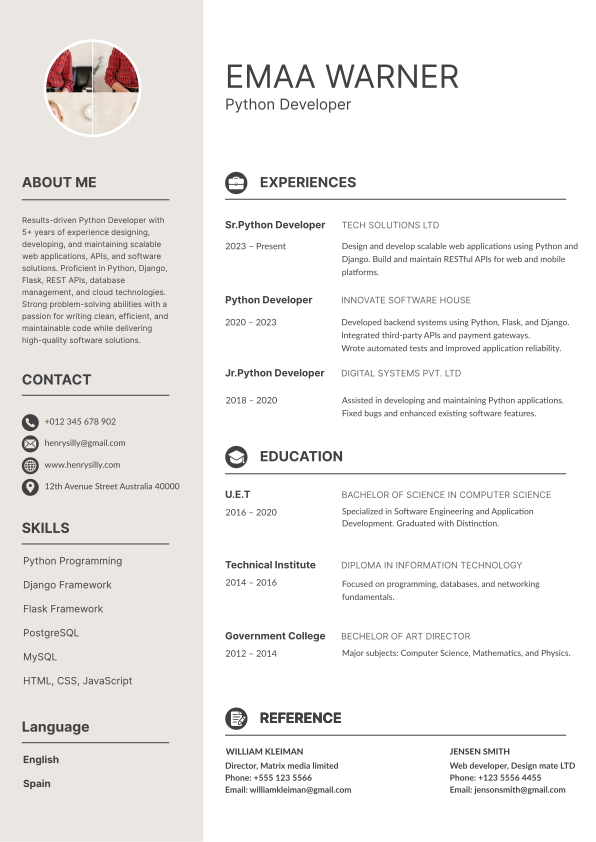
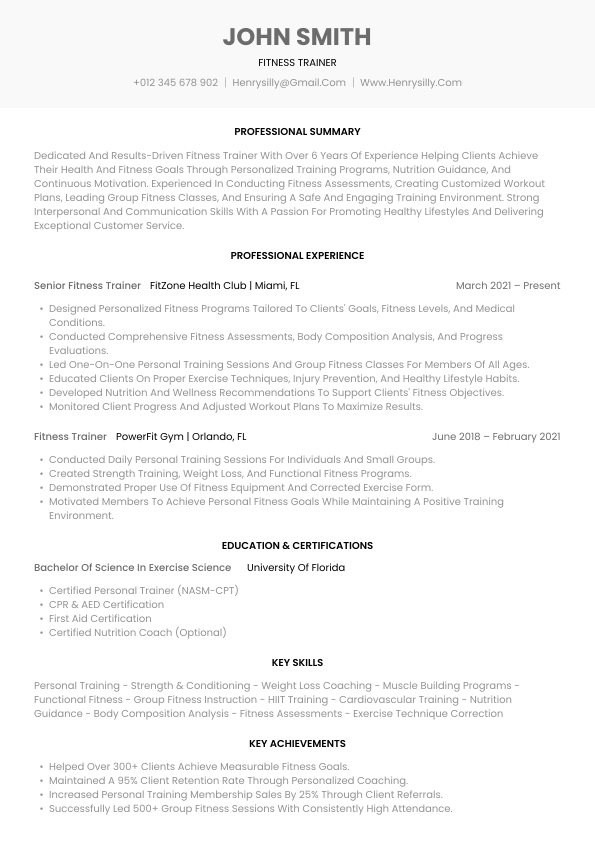
ATS-Optimized Systems Engineer Resume Template
How to Format a Systems Engineer Resume for Infrastructure Directors
Infrastructure leaders look for certifications (RHCE, VCP), virtualization scale, automation playbooks, and uptime metrics:
- Header Credentials: Display full name, certification title (e.g. Red Hat Certified Engineer RHCE / VCP-DCV), phone, and LinkedIn.
- Reverse-Chronological Layout: Highlight recent systems engineering roles, server fleet sizes (number of nodes), and Ansible automation projects first.
- Typography & Hierarchy: Use standard sans-serif fonts such as Arial, Calibri, or Inter (10–11.5pt body text, 14–16pt section headers).
- Quantified Uptime Stats: Always state metric achievements (e.g. "Maintained 99.999% SLA uptime across a 1,800-node hybrid VMware/RHEL infrastructure").
Key Systems Engineer Skills Matrix (100+ Core Keywords)
Operating Systems & Virtualization
- Red Hat Enterprise Linux (RHEL 8/9)
- Ubuntu Server & Debian Admin
- Windows Server 2022 / 2019 Administration
- VMware vSphere ESXi & vCenter 8
- vMotion, DRS & VMware High Availability
- KVM & Microsoft Hyper-V Virtualization
- Linux Kernel Tuning & Systemd
- Dell iDRAC & HP iLO Hardware Mgmt
Automation & Cloud IaC
- Ansible Automation & Playbook Creation
- Puppet, Chef & SaltStack Config
- Terraform HCL Infrastructure Provisioning
- AWS EC2, VPC, S3 & Route 53 Cloud
- Microsoft Azure IaaS & Virtual Machines
- Bash & Python System Automation
- PowerShell & Scripting Utilities
- Docker & Kubernetes Container Basics
Storage, Network & Security
- SAN & NAS Storage (NetApp, Pure Storage)
- Fibre Channel, iSCSI & NFS Protocols
- Veeam Backup & Disaster Recovery
- Active Directory, GPO & Kerberos
- LDAP & Azure Entra ID SSO
- CIS Benchmarks & OS Security Hardening
- Selinux, AppArmor & IPTables/Firewalld
- IPSec VPN, BGP & VLAN Networking
Certifications & Monitoring
- Red Hat Certified Engineer (RHCE)
- VMware Certified Professional (VCP-DCV)
- AWS Certified Solutions Architect
- Microsoft Certified: Windows Server Hybrid
- Zabbix & Nagios Monitoring
- Datadog, Prometheus & Grafana
- Root Cause Analysis (RCA)
- ITIL v4 Infrastructure Change Management
Systems Engineer Resume Summary Examples
Example 1: Senior Systems Engineer (RHCE & VCP Certified)
Red Hat Certified Engineer (RHCE) and VCP-DCV Certified Senior Systems Engineer with 9+ years managing 2,000+ RHEL and VMware ESXi server nodes. Automated 100% of server provisioning using Ansible playbooks, configured NetApp SAN storage arrays, and maintained 99.999% infrastructure availability.
Example 2: Hybrid Cloud & Infrastructure Systems Architect
Infrastructure Architect with 8+ years designing hybrid cloud server architectures across AWS EC2 and on-premise data centers. Automated infrastructure deployment with Terraform, cutting new server cluster provisioning time from 5 days to 20 minutes.
Example 3: Windows & Active Directory Systems Administrator
Systems Administrator specializing in Windows Server 2022, Active Directory forest migrations, Group Policy (GPO), and Azure Entra ID SSO integration. Administered Hyper-V clusters supporting 3,500 enterprise users with zero downtime.
Example 4: Linux Systems Automation Engineer
Systems Automation Engineer with 6+ years building Python and Bash automation scripts, Zabbix enterprise monitoring, and CIS security hardening rules across 800+ RHEL and Ubuntu servers.
25+ Copy-Ready Systems Engineer Bullets with Metrics
- Administered a 1,800-node virtualized server environment on VMware vSphere 8 and RHEL 9, maintaining 99.999% uptime.
- Authored 120+ Ansible playbooks to automate OS patching, security hardening (CIS benchmarks), and application deployments.
- Architected NetApp SAN and Pure Storage Fibre Channel storage arrays, managing 500+ TB of enterprise data with automated Veeam replication.
- Provisioned hybrid AWS infrastructure using Terraform HCL scripts, connecting on-premise data centers via IPsec VPN tunnels.
- Configured Zabbix and Datadog monitoring alerts across physical and cloud nodes, reducing mean time to resolution (MTTR) by 40%.
- Migrated 300 legacy physical servers to VMware ESXi virtual machines (P2V), saving $220,000 in annual hardware maintenance costs.
Systems Engineer Certifications & Education Section
OFFICIAL SYSTEMS CERTIFICATIONS
Red Hat Certified Engineer (RHCE - RHEL 9)
Red Hat — Verification ID #RHCE-987654
VMware Certified Professional - Data Center Virtualization (VCP-DCV 2024)
VMware / Broadcom — Verification ID #VCP-123456
EDUCATION
Bachelor of Science in Systems Engineering & Computer Networks
Penn State University — World Campus
Systems Engineer Cover Letter Template
Dear Hiring Manager,
I am writing to express my enthusiastic interest in the Senior Systems Engineer position at [Company Name]. As an RHCE and VCP-DCV certified Systems Engineer with over 9 years of experience managing 2,000+ server nodes across VMware ESXi, RHEL Linux, Ansible automation, and NetApp SAN storage, I am eager to drive your infrastructure operations.
In my previous role, I automated 100% of server provisioning via Ansible playbooks, maintained 99.999% SLA availability, and led P2V server migrations that saved $220,000 annually. My focus is on high availability, automated configuration management, and hybrid cloud integration.
I look forward to discussing how my systems engineering background aligns with [Company Name]’s infrastructure goals.
Systems Engineer Salary Benchmarks & Industry Pay
- Mid-Level Systems Engineer: $95,000 – $125,000 per year
- Senior Certified Systems Engineer (RHCE / VCP): $125,000 – $165,000 per year
- Principal Infrastructure Architect: $150,000 – $195,000 per year
- VP of Systems Engineering & Infrastructure: $185,000 – $240,000+ per year
Frequently Asked Questions (FAQs)
Q1. What are the top keywords for a Systems Engineer resume?
Top keywords include: RHEL, VMware ESXi, Ansible, Linux, Terraform, SAN/NAS, Active Directory, Zabbix, Python, and CIS Hardening.
Q2. Which certifications carry the most weight on a Systems Engineer CV?
Red Hat Certified Engineer (RHCE), VMware Certified Professional (VCP-DCV), and AWS Solutions Architect.
Q3. Why is Ansible automation essential for modern Systems Engineers?
Manual server management does not scale; demonstrating Ansible playbook automation proves you can manage thousands of nodes efficiently.
Q4. What is the average salary for Senior Systems Engineers?
Salaries range from $125,000 to $165,000+ for certified Linux and VMware systems engineers.
Q5. Should SAN/NAS storage experience be listed alongside operating system skills?
Yes! Enterprise systems engineers must manage underlying NetApp/Pure Storage arrays and Fibre Channel networks powering virtual machines.