Our Templates
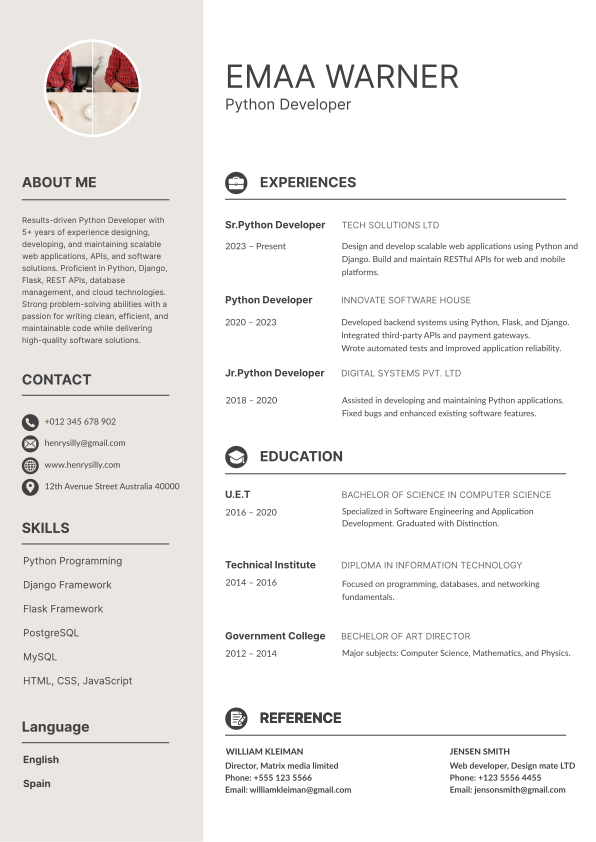
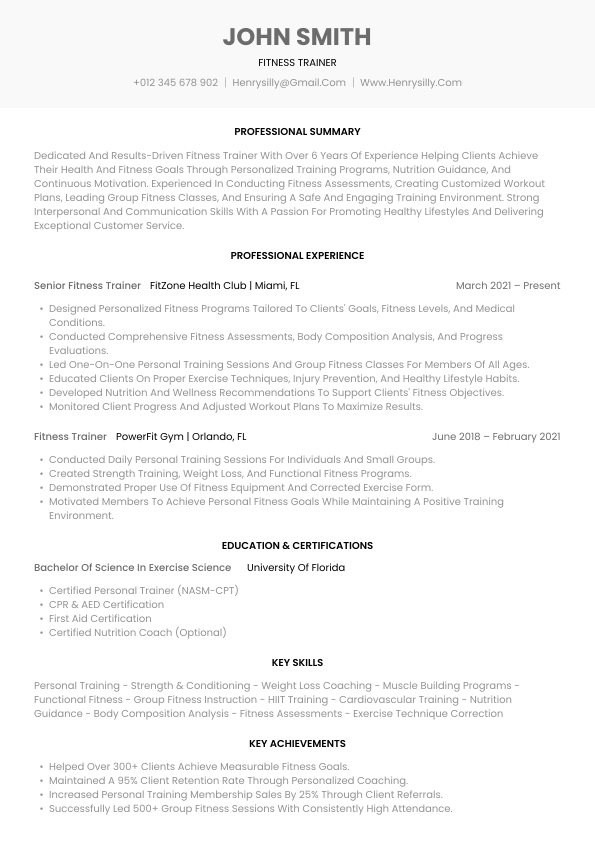
We have researched and build top notched ATS Approved interview calling every industry resume templates for you.
System Administrator Resume Templates
ATS approved System Administrator resume template. Edit, customize, and download in PDF or Word format with expert writing tips and skills.
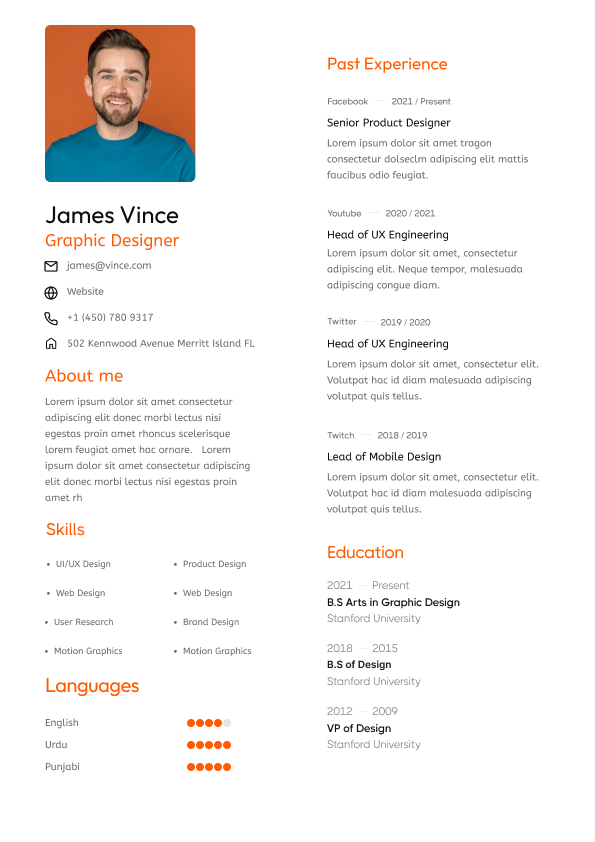
Table of Contents
System Administrator (SysAdmin) Resume: Ultimate Guide, 500+ Line Examples, Formats & 100+ Keyword Templates
A System Administrator (SysAdmin) resume must demonstrate enterprise server administration across Linux (RHEL, Ubuntu, CentOS) and Microsoft Windows Server (2022/2019), virtualization platforms (VMware vSphere ESXi, Hyper-V, Proxmox), cloud environment management (AWS EC2, Azure VMs), identity federation (Active Directory, Microsoft Entra ID / Azure AD, LDAP, GPO), patch management automation (Ansible, PowerShell, WSUS, SCCM), backup and disaster recovery (Veeam, Datto), network services (DNS, DHCP, VPN, Firewalls), and system monitoring (Zabbix, Nagios, PRTG). IT infrastructure directors and sysadmin team leads evaluate a System Administrator CV for server fleet volume (e.g. 500+ servers), uptime SLA metrics (99.99%), security patch compliance, and mean time to recovery (MTTR).
Whether you are writing a Senior System Administrator resume, a Linux SysAdmin CV, a Windows Systems Administrator resume, an IT Systems Engineer CV, or a Hybrid Infrastructure Administrator application, your document requires high ATS keyword density, official certifications (RHCSA/RHCE, MCSA, CompTIA Linux+, VCP-DCV), and quantified uptime stats.
This ultimate master guide details the complete System Administrator resume framework: ATS formatting standards, key SysAdmin technical skills matrix featuring 100+ keywords, 4 professional summary examples, 25+ copy-ready metric bullet points, cover letter template, interview prep, salary benchmarks, and 5 detailed FAQs with 30+ search keywords.
System Administration & Server Infrastructure Market Growth
System Administrators keep enterprise IT networks, server clusters, data storage, and employee access operational 24/7/365. Modern SysAdmins bridge legacy on-premise physical data centers with automated hybrid cloud infrastructure using Ansible, PowerShell, and Terraform.
To land competitive Senior System Administrator positions ($90,000 to $130,000+) or Systems Infrastructure Manager roles ($115,000 to $155,000+), your resume must highlight active Red Hat, VMware, or Microsoft certifications, server count, and 99.99% uptime achievements.
What Does a System Administrator Do? Core Responsibilities & Scope
A System Administrator maintains, configures, backs up, secures, and automates server computers, operating systems, user authentication, and storage systems. Primary duties include:
- Administering enterprise server operating systems: Linux (RHEL 8/9, Ubuntu, Rocky Linux) and Windows Server 2022/2019/2016.
- Managing virtualization clusters: VMware vSphere ESXi, vCenter server, vMotion, and Hyper-V host clusters.
- Managing Active Directory domain services (AD DS), Group Policy Objects (GPO), LDAP, DNS, DHCP, and Azure Entra ID single sign-on.
- Automating administrative tasks, security hardening (CIS benchmarks), and server updates using Ansible, PowerShell, and Bash.
- Configuring and verifying daily backup operations, disaster recovery replication, and snapshot restores using Veeam Backup & Replication.
- Administering storage infrastructure: SAN/NAS arrays (NetApp, Synology, iSCSI, NFS) and RAID disk arrays.
- Monitoring system health, CPU/RAM performance, disk space utilization, and event logs using Zabbix, Nagios, or PRTG.
- Deploying operating system security patches (WSUS, Yum/Dnf repos) and remediating vulnerability scan findings.
ATS-Optimized System Administrator Resume Template
How to Format a System Administrator Resume for IT Hiring Managers
IT managers scan SysAdmin CVs for certifications (RHCSA, VCP, MCSA), server fleet size, OS balance, and uptime statistics:
- Header Certifications: Feature active badges (e.g. RHCSA, VMware VCP-DCV, CompTIA Linux+), phone, email, and LinkedIn.
- Reverse-Chronological Layout: Highlight recent sysadmin roles, server count managed (e.g. 400+ nodes), VMware environments, and Active Directory projects first.
- Typography & Hierarchy: Use standard sans-serif fonts such as Arial, Calibri, or Inter (10–11.5pt body text, 14–16pt section headers).
- Quantified Uptime & Automation Stats: State stats (e.g. "Maintained 99.99% system availability across 450 Linux and Windows servers while automating patch deployment with Ansible").
Key System Administrator Skills Matrix (100+ Core Keywords)
Operating Systems & Virtualization
- Red Hat Enterprise Linux (RHEL 8/9)
- Ubuntu Server & Debian Admin
- Windows Server 2022, 2019 & Active Directory
- VMware vSphere ESXi 7/8 & vCenter
- vMotion, High Availability (HA) & DRS
- Microsoft Hyper-V & Proxmox VE
- AWS EC2 & Azure Virtual Machines
- Docker & Container Administration
Identity, Automation & Tools
- Active Directory Domain Services (AD DS)
- Group Policy Objects (GPO) & Security Groups
- Microsoft Entra ID (Azure AD) & Okta SSO
- Ansible Automation & Playbooks
- PowerShell & Bash Shell Scripting
- WSUS & SCCM Patch Management
- Veeam Backup & Disaster Recovery
- SAN & NAS Storage (iSCSI, NFS, RAID)
Network Services & Security
- DNS, DHCP, WINS & IP Management
- TCP/IP, Subnetting & VLAN Configuration
- IPSec VPN & SSL VPN Client Support
- Firewalld, IPTables & Windows Firewall
- CIS Benchmarks & OS Hardening
- SSL/TLS Certificate Lifecycle Management
- SSH, RDP & Remote Desktop Protocol
- Dell iDRAC & HP iLO Remote Hardware
Certifications & Monitoring
- Red Hat Certified System Administrator (RHCSA)
- VMware Certified Professional (VCP-DCV)
- CompTIA Linux+ & Network+
- Microsoft Certified: Windows Server Hybrid
- Zabbix, Nagios & PRTG Monitoring
- Datadog & SolarWinds Server Audit
- ITIL v4 Change Management
- Root Cause Analysis (RCA)
System Administrator Resume Summary Examples
Example 1: Senior Linux & Windows System Administrator (RHCSA & VCP)
RHCSA and VCP-DCV certified Senior System Administrator with 8+ years of experience managing 500+ Linux (RHEL/Ubuntu) and Windows Server 2022 instances across VMware ESXi and AWS EC2. Automated patch deployment using Ansible playbooks, configured Active Directory GPOs, and maintained 99.99% system availability.
Example 2: Windows Server & Active Directory Administrator
Windows Systems Administrator with 6+ years specializing in Windows Server 2022/2019, Active Directory DS, Group Policy (GPO), and Azure Entra ID SSO integration. Managed Veeam backup operations and Hyper-V clusters for 2,000+ corporate users with zero downtime.
Example 3: Enterprise Linux SysAdmin & Automation Engineer
Linux System Administrator with 5+ years building Bash/Python automation scripts, Zabbix monitoring alerts, and CIS security hardening rules across 350+ RHEL and Ubuntu servers. Reduced manual server setup time by 80%.
Example 4: Hybrid Cloud & Infrastructure Administrator
Hybrid Infrastructure SysAdmin experienced in managing VMware vSphere data center servers alongside AWS EC2 and S3 cloud storage. Configured IPSec VPN tunnels and automated backup snapshots with 100% SLA compliance.
25+ Copy-Ready System Administrator Bullets with Metrics
- Administered a hybrid server fleet of 450+ RHEL Linux and Windows Server 2022 instances on VMware vSphere 8, achieving 99.99% uptime.
- Automated weekly security patching and package updates across 300+ servers using Ansible playbooks and WSUS, cutting manual effort by 75%.
- Managed Active Directory Domain Services, Group Policy Objects (GPO), and Azure Entra ID SSO access for 2,500+ corporate employees.
- Configured Veeam Backup & Replication with daily offsite copy jobs, maintaining sub-1-hour RPO and RTO SLAs for critical databases.
- Deployed Zabbix and PRTG monitoring agents across all physical and virtual nodes, reducing mean time to detection (MTTD) by 45%.
- Hardened Linux and Windows server OS instances following CIS Security Benchmarks, remediating 100% of high-severity vulnerability audit items.
System Administrator Certifications & Education Section
OFFICIAL SYSADMIN CERTIFICATIONS
Red Hat Certified System Administrator (RHCSA)
Red Hat — Verification ID #RHCSA-987654
VMware Certified Professional - Data Center Virtualization (VCP-DCV)
VMware / Broadcom — Verification ID #VCP-123456
EDUCATION
Bachelor of Science in Information Technology & Network Administration
Oregon Institute of Technology
System Administrator Cover Letter Template
Dear Hiring Manager,
I am writing to express my strong interest in the Senior System Administrator position at [Company Name]. As an RHCSA and VCP-DCV certified System Administrator with over 8 years of experience managing 500+ Linux and Windows Server instances on VMware ESXi and AWS, I am eager to maintain your infrastructure reliability.
In my previous role, I automated server patching via Ansible playbooks, managed Active Directory GPOs for 2,500 users, and achieved 99.99% SLA uptime with zero data loss. My focus is on system availability, automated configuration management, and zero-trust identity administration.
I look forward to discussing how my SysAdmin background aligns with [Company Name]’s IT operations goals.
System Administrator Salary Benchmarks & Industry Pay
- Mid-Level System Administrator: $75,000 – $98,000 per year
- Senior Certified System Administrator (RHCSA / VCP): $98,000 – $130,000 per year
- Systems Infrastructure Manager: $115,000 – $155,000 per year
- Director of IT Infrastructure & Systems: $150,000 – $200,000+ per year
Frequently Asked Questions (FAQs)
Q1. What are the top keywords for a System Administrator resume?
Top keywords include: Linux, Windows Server, VMware ESXi, Active Directory, Ansible, PowerShell, Veeam, GPO, Entra ID, and Zabbix.
Q2. Which certification holds the most value for Linux SysAdmins?
Red Hat Certified System Administrator (RHCSA) is the universally recognized gold standard for Linux system administration.
Q3. Why is server count (fleet volume) important on a SysAdmin CV?
Stating the exact number of physical/virtual servers managed (e.g. 500+ nodes) proves experience handling scale.
Q4. What is the average salary for Senior System Administrators?
Salaries range from $98,000 to $130,000+ per year for certified Linux/VMware SysAdmins.
Q5. Should Ansible and PowerShell scripting be listed on a SysAdmin resume?
Yes! Modern sysadmin roles require automation scripting to manage large server fleets without manual effort.